

In a world where kids are glued to screens for entertainment, it’s important to find ways to get them interested in learning about the world around them – and what better way to do that than by teaching them about the solar system? The solar system is an endlessly fascinating topic, and there are many reasons why kids should learn about it. For one, it can help them understand the scale of the universe and their place in it. It can also teach them about the importance of the sun and how it affects the Earth. And, of course, learning about the planets, moons, and other objects in the solar system is just plain fun! So why not start teaching your kids about the solar system today? They’ll be sure to thank you for it later.
When children learn about the solar system, they can see how fragile and important it is for their planet. They will become more conscious of the resources on their planet if they understand its uniqueness and beauty. By knowing about the other planets, they can compare and contrast them with their home planets. Mars has a mountain whose summit is the highest in the solar system. Uranus rolls rather than rotates because it moves sideways. Neptune has nine times the winds of Earth. Dwarf Planets, despite their cold and rocky environments, cannot support life because they lack an atmosphere.
Water or nature displays and activities are likely to be present in many planetariums as part of a natural history museum that is intended to further connect the Earth with the solar system. In addition to NASA, it studies Earth in general. Climate Kids: NASA’s Eyes on Earth will provide you with fun and educational activities for your family.
Children can learn a lot about the solar system by modeling it. There are several ways to accomplish this, including cutting out various-colored planets from construction paper and laying them out on the ground. Put the sun in the center and ask your children to put the planets in their proper positions. Discuss the properties of each planet.
Our solar system consists of a star, the Sun, and everything that is bound to gravity, which includes Mercury, Venus, Earth, Mars, Jupiter, Saturn, Uranus, and Neptune, as well as dwarf planets such as Pluto, dozens of moons, and millions of asteroids, come
What Kids Should Know About The Solar System?
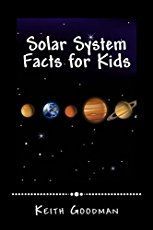
Light and heat are emitted by the Sun, which is a massive, hot gas ball. The Sun is home to eight planets. Mercury is the closest planet to the Sun, while Neptune is the farthest away. Jupiter is the largest planet and Mercury is the smallest planet in the solar system.
The image was captured by NASA’s Juno spacecraft during a mission to Mars. The Sun is one of eight planets in our solar system, which orbit the star in a circle. Venus is much brighter than Earth, with a size and material similar to Earth. Furthermore, it is the hottest planet in the Solar System, with temperatures reaching 460C/480F. If the International Space Station is visible in the sky, it will be brighter and easier to see than Venus. Discover how to find the space station using a variety of techniques. The Earth is one of the largest planets in our solar system, with a moon as a natural satellite. Mars is the most likely place for humans to live in the future.
Saturn’s moon, Titan, is the solar system’s second largest moon. Titan, unlike most other planets, is mostly made up of gases that have a rocky core. Another moon of Saturn, Enceladus, has also been designated as a possible habitable moon. Uranus is a blue planet rather than a water planet because it is made up of gases that glow blue. The new solar system quiz page can be accessed by clicking the image below. Neptune’s distance from the Sun makes it impossible for it to circle the Sun for 166 years. Every year, the north and south poles of Neptune hold a pair of 21-year spells.
Why Are Solar Systems Important?
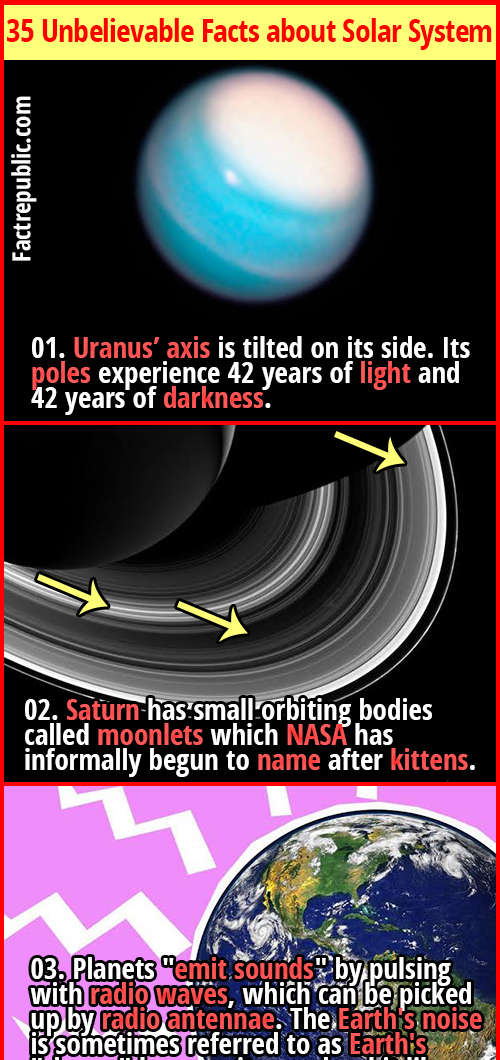
Our solar system is home to the only habitable planet known, the only star visible from the ground, and the only world with spacecraft. Understanding the origins and evolution of planets, as well as the conditions under which life exists, is critical for understanding the solar system.
The goal of this project is to transmit video from a camera to a monitoring station via wireless transmission. Solar energy is derived from the sun’s energy, which is the energy that it emits. Chapter 4 is devoted to the history and technical analysis of Solar Water Heating systems, as well as the most recent technology. They believe that solar energy has many advantages, but they also recognize that solar energy has a high price. According to Aristotelian theory, the solar system and the universe are homocentric and geocentric. During this time period, various human societies were shaped by this view, and religion evolved in parallel. The presence of Neodymium-142, a Samarium-like element, during the formation of our Solar System was discovered. In comparison to all other planets in our solar system, our Earth has an over-sized moon. Jupiter, on the other hand, has a much smaller number of moons than does its planet, which has a different orbit and physical characteristics.
Solar energy is an important source of renewable energy for agriculture. They use solar energy to produce products like plastic, which we use on a daily basis. They are made using a process known as photovoltaics that generates renewable energy. Solar energy is used to convert light into electricity as part of the photovoltaic system.
The sun provides the majority of the energy needed to run the planet’s ecosystems. Sun energy is responsible for the climate on Earth. Weather patterns are formed by the sun’s energy, which warms the Earth. The sun’s energy is responsible for the Earth’s water cycle, as well as ocean tides.
In addition to being important for human life, the sun’s energy is also used to generate heat. We use solar energy to manufacture products, such as plastic, every day. These products are also made with solar energy by using a process known as photovoltaics.
We can only survive and thrive if we generate enough solar energy. We rely on the sun to provide food, clean air, and a stable environment for us. The use of solar energy is the future of energy, and we must protect it. We can use solar energy to create products like plastic everyday, as well as make renewable energy sources.
What Are The Objectives Of Learning About Solar System?
The solar system will be described for students. Students will be able to classify planets based on their properties, including their rocky and gassy surfaces. Students will be able to name the planets in ascending order of distance from the Sun.
A child’s education should focus on the solar system in general. One of the fastest-growing areas of scientific research is planetary science. One of the simplest ways to get your children interested in movies is to show them films. If you can’t handle documentary films for your student, start them off with science fiction movies. A visual and interactive way of teaching children about the solar system can make learning more fun. Having children watch the planets as they fly through the sky helps instill in them a sense of realism and relevance. Another excellent idea is to play “I Spy” with your children and ask them to identify constellations and planets.
The Benefits Of Space Exploration
In addition, we have developed new technologies in the space sector, such as GPS, optical navigation, and weather forecasting. It also paved the way for the discovery of new worlds and species.
Why Is It Important To Study The Universe And Solar System?
We are able to observe everything in the Universe, including comets, planets, distant galaxies, and the echo of the Big Bang, through astronomy.
The University of Virginia’s astronomy department has been a world leader in the development of cutting-edge science. The department offers two majors that allow students to study all of the courses that we have to offer. The astronomy major can be studied in a variety of disciplines, including physics, math, computer science, critical thinking, and problem-solving. Engineering, mathematics, computer science, and environmental science majors in astronomy are all well prepared to work in engineering, mathematics, computer science, or environmental science. Many astronomy students find employment or graduate school after completing their degrees. There is an urban feel to the city at Charlottesville, as well as the cozy atmosphere of a college town.
The role of galaxies in our understanding of the universe is enormous. We learn how matter is organized in the universe by observing it on the scale of the universe. Scientists study how matter is currently organized as part of their investigation into the nature and history of the universe, as well as how that organization has changed over time.
It is not only important to study in order to improve your educational abilities, but also to gain personal skills. It is possible to increase your self-confidence, competence, and self-esteem by practicing good study skills. It also alleviates the stress and anxiety associated with deadlines and exams.
Studying galaxies can be both challenging and rewarding. By learning about the universe and improving your skills, you can learn a lot. The study of galaxies is an excellent way to find a challenge you’re looking for.
The Importance Of Studying The Universe
We build our civilization by studying the origins of the Universe and exploring its mysteries. Because it is a star, it is a relatively common one in our Milky Way, one of approximately 100 billion stars. Our planet’s climate is influenced by the sun, which drives weather, ocean currents, seasons, and seasons, as well as photosynthesis, which helps plants survive. Life on Earth would be impossible if the sun’s heat and light were not present. Human space exploration aids in answering fundamental questions about our place in the Universe and the history of our solar system. We expand technology, create new industries, and promote a peaceful relationship with other countries as a result of the challenges faced by human space exploration.

Since I remember myself, an inner voice inside my head told me to look up and explore what this universe has to offer. I invite all space exploration enthusiasts to join me in my journey.